Sound Post Update.
July 16, 2026
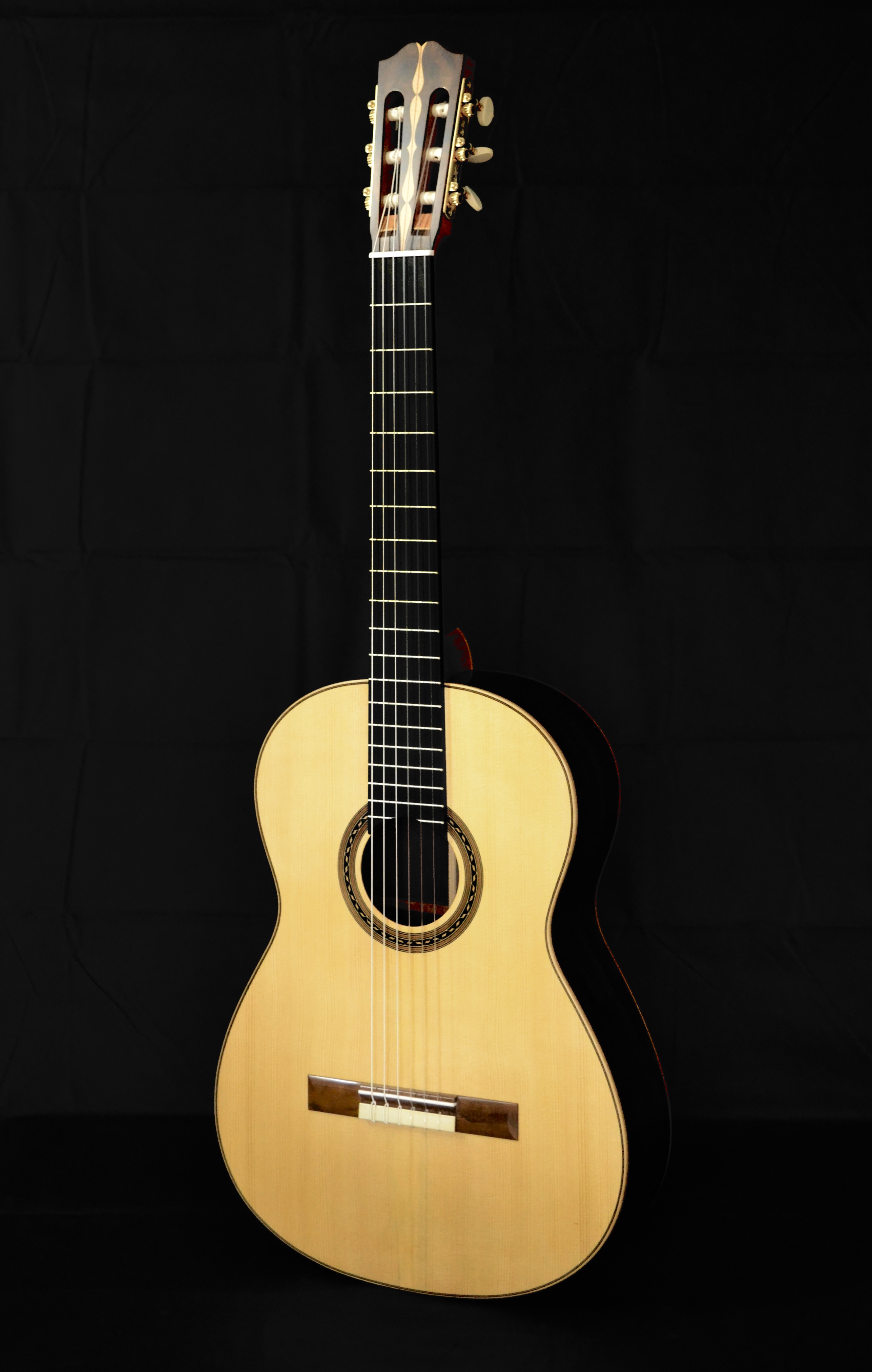
I’ve now sent out a few guitars with the sound post installed. So far the post has not fallen out during transportation. The key is to position it when the humidity is high if possible. Therefore the guitar is less likely to swell when it leaves the workshop, preventing the post from becoming loose. I make two spare posts, one slightly shorter and one slightly longer than the one in the guitar, which I leave in the case. Should the post become loose the longer one can be used as a replacement. If the guitar doesn’t become subject to extreme humidity the post should remain stable from then on. GSI asked if I would send the guitar without the post installed. They managed to position it ok on arrival. It is very simple to do, but it was good to know there was no problems.
It has been interesting to hear the response from players and dealers to the sound post guitars. So far they have been positive and the dealers have been very pleased. All talk about the clarity, focus and purity of the sound. One commented that the guitar was neutral sounding. This would allow the player to manipulate the character of sound I would hope. Although the guitars are not particularly loud, as one mentioned, the qualities of the tone is more important for me. A clear tone will project especially in the bass registers. I haven’t heard from anyone who uses the guitar both with and without the post. I keep the post in all the time personally, but I hope guitarist will experiment with this in the future. The broader and looser (more traditional) sound palette can be tightened up with the addition of the post, and the guitar can be driven harder. This allows the guitarist to manipulate the response of the instrument depending on the type of music or in the situation they are playing. A bit like using an effects pedal.
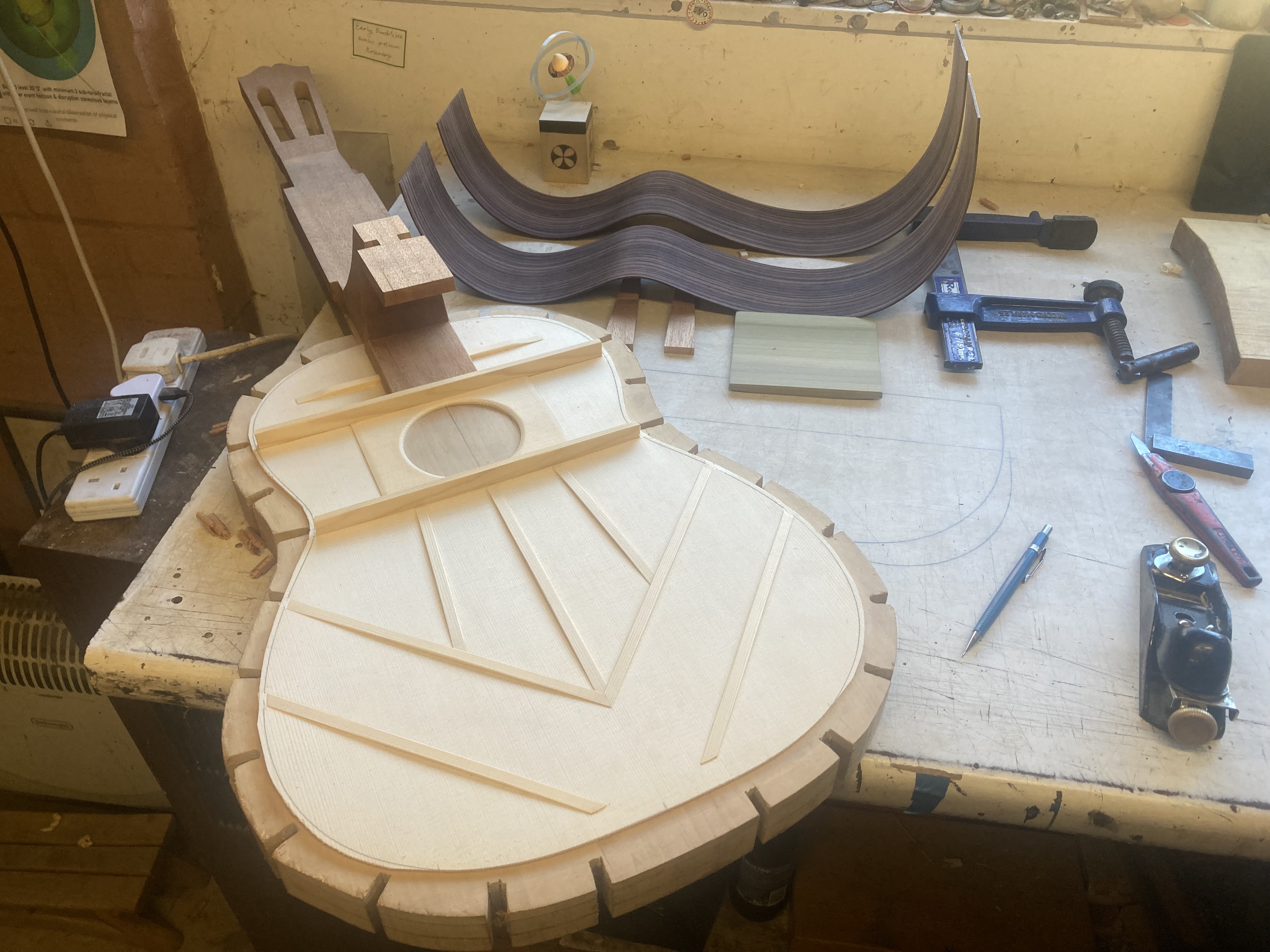
The sound post isn’t a structural integral component of the guitar. My concepts have remained, right from the beginnings of my career, to make lightweight guitars without compromising on structural rigidity. Having said this, I have been adjusting the guitar to accommodate the effect the sound post has on the instrument. Due to the post raising the air resonance by a tone, I have been gradually thinning the soundboard and back of the guitar to bring down the air resonance. This is also due to a soundboard strutting pattern I’ve developed which is much stiffer than before. I’m also reducing the height of the fan struts to create more flexibility in the lower bout. I’m tempted to take the sides thinner than my usual 2mm, as this can lower the air resonance quite significantly I’ve found, but I’m reluctant to compromise on their rigidity.
All my guitars built with the raised longitudinal back bar can have a sound post fitted. Any piece of rigid wood will suffice. It needs to be about 5mm x 5mm and about 1mm longer than the gap between the harmonic bar and the raised back bar. A piece of dowel would be perfect. See my video link on the Sound Post page of this website/blog to see how to fit it in. I must make a slight correction to my explanation there. For a nice fit the post should be about 1cm, not 2cm as I suggested in the video, away from the centre of the harmonic bar for the initial fit. Then it can be eased to a vertical position. Maybe I will do another video soon. As I’ve said it’s very easy to do through the sound hole with the strings on and up to tension, and it takes me just a few seconds to put in and out. There is room for experimenting with its position, but the effects are very subtle and I keep it in the middle.
Below are a couple of links to reviews of my sound post guitars at Siccas. There you can watch video demonstrations.
https://www.siccasguitars.com/products/jake-p-fuller-2026-no-137
PURNELL GUITARS
January 11, 2010
Jake P Fuller
Classical Guitar Maker
I have been a classical guitar maker since leaving the London Guildhall University where I studied Musical Instrument Technology. During this time I have developed my own ideas and methods of the guitars design, my aim being to produce instruments with character and with all the aspects needed by the professional and amateur guitarist. On this site you can see my recent work and I will endeavour to describe my techniques and approach to classical guitar making.

